

When you hear the word hypnosis, what comes to mind? For many, it conjures images of stage performers making people cluck like chickens. In reality, therapeutic hypnosis is a scientifically backed tool used by healthcare professionals worldwide to facilitate profound personal growth.
What is Hypnosis?
To understand hypnosis, you have to look past the Hollywood tropes. It is not sleep, nor is it a loss of control. Technically, it is a state of focused attention and heightened suggestibility. During a session, your conscious, critical mind takes a backseat, becoming a quiet observer. This creates a bridge to the subconscious mind, the part of your brain that stores habits, emotions, and long-term memories.
How Hypnosis Works
The science behind how hypnosis works often involves a shift in brainwave activity. Research using EEG technology shows that individuals in hypnosis often move from Beta waves (active thinking) into Alpha or Theta waves, the same states we experience during deep meditation or right before falling asleep.
In this state, a hypnotherapist provides “suggestions” that bypass the mental filters that usually keep us stuck in old patterns. Because the brain often struggles to distinguish between vividly imagined experiences and reality, these positive suggestions can rewire your neural pathways toward positive change.
Hypnosis Myths and Misconceptions
Let’s clear the air regarding hypnosis myths and misconceptions:
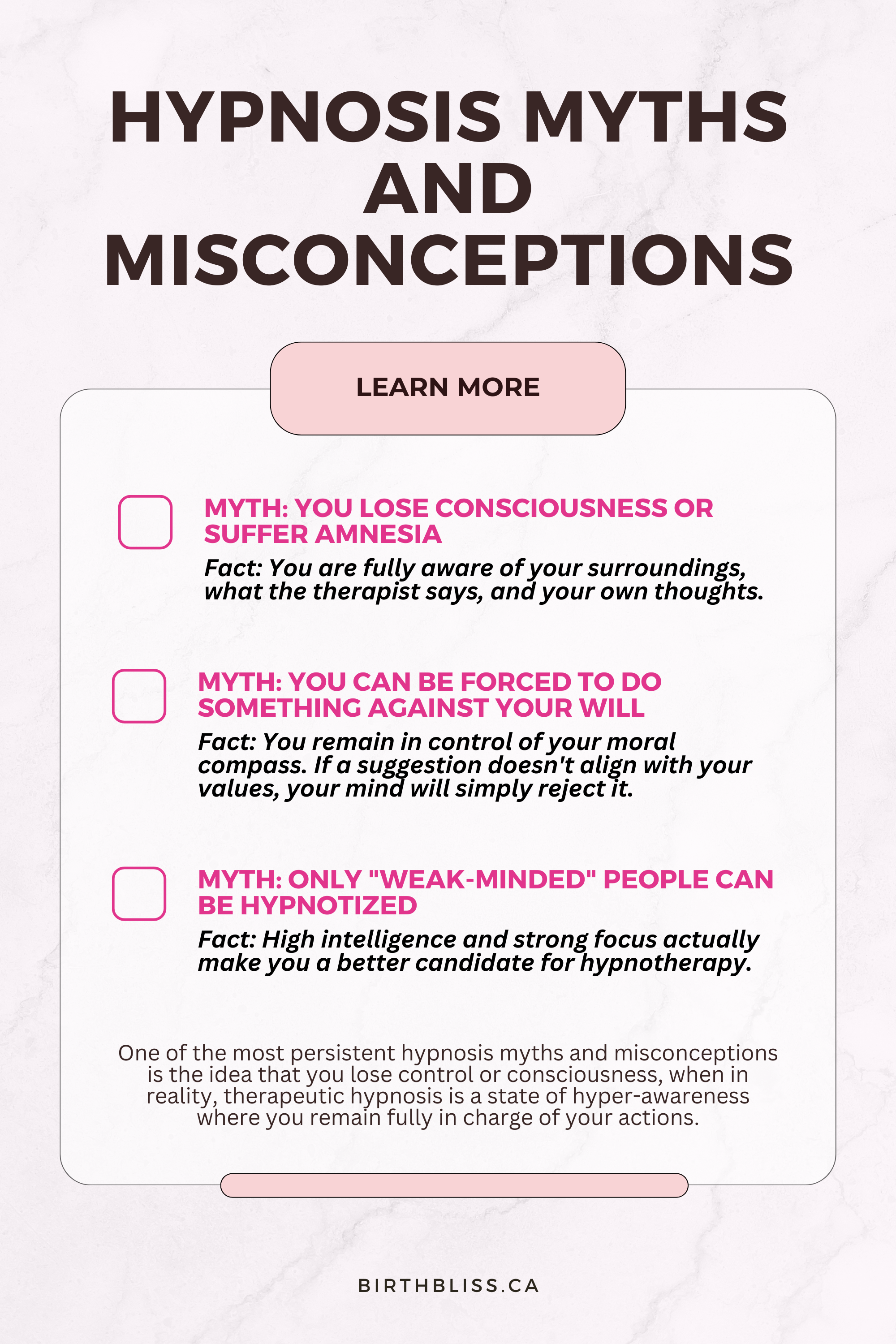
- Myth: You lose consciousness or suffer amnesia.
- Fact: You are fully aware of your surroundings, what the therapist says, and your own thoughts.
- Myth: You can be forced to do something against your will.
- Fact: You remain in control of your moral compass. If a suggestion doesn’t align with your values, your mind will simply reject it.
- Myth: Only “weak-minded” people can be hypnotized.
- Fact: High intelligence and strong focus actually make you a better candidate for hypnotherapy.
The Collaborative Path to Change
Hypnotherapy is a partnership. You and your hypnotherapist work together to replace negative mental blueprints with new, vibrant images, sounds, and emotions. Whether you are addressing anxiety, smoking cessation, or confidence, you are the one doing the work; the therapist is simply your facilitator.
It is also important to remember that, in a sense, all hypnosis is self-hypnosis. You are the one allowing the state to occur. By learning self-hypnosis techniques, you can even continue your progress at home, reinforcing new habits whenever you choose.
Summary of Benefits of Hypnosis
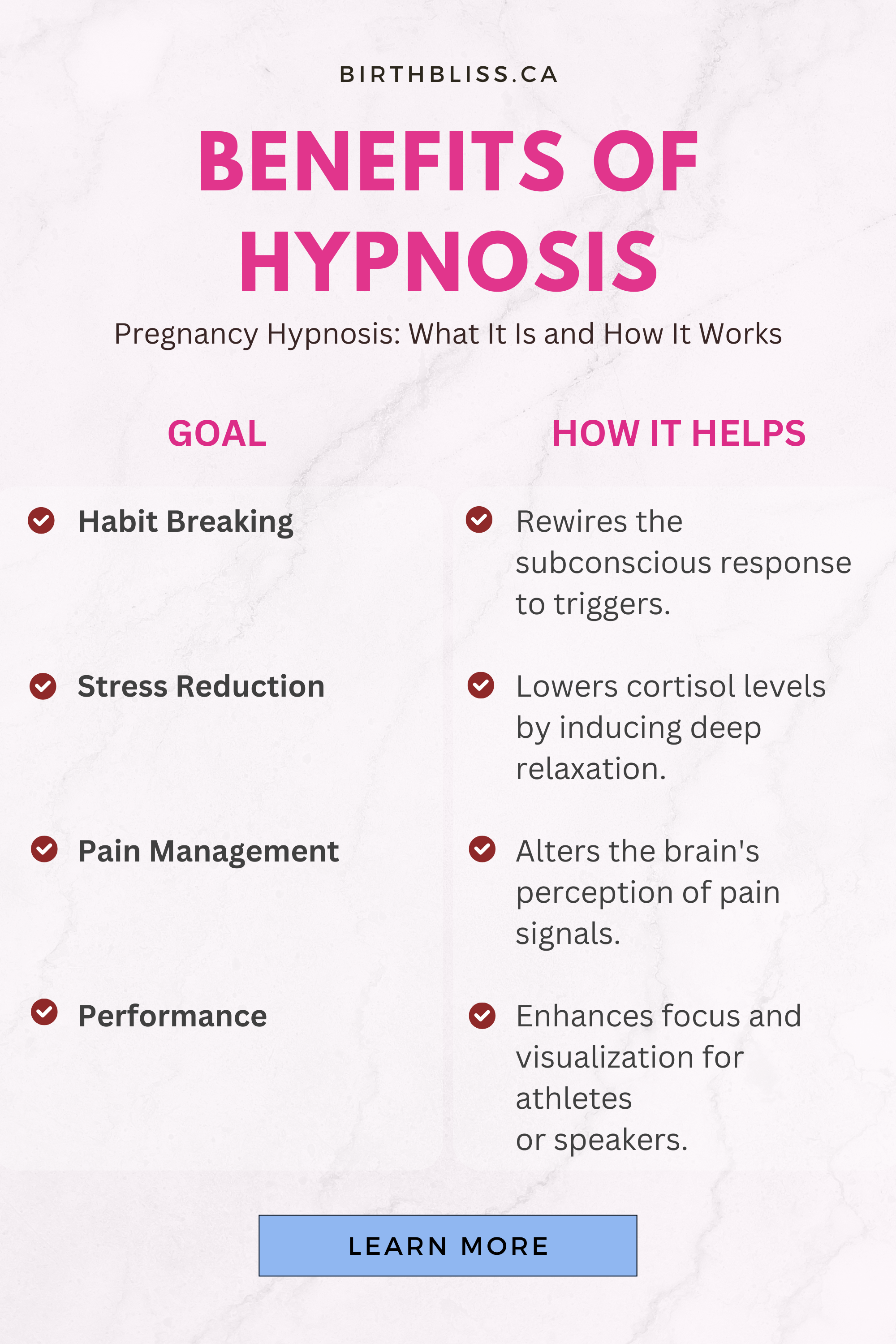
| Goal | How Hypnosis Helps |
| Habit Breaking | Rewires the subconscious response to triggers. |
| Stress Reduction | Lowers cortisol levels by inducing deep relaxation. |
| Pain Management | Alters the brain’s perception of pain signals. |
| Performance | Enhances focus and visualization for athletes or speakers. |
✨Exclusive Deals:
- Grab Mellow Mornings for Pregnancy for a calm start to your day filled with baby love 💖 https://get.birthbliss.ca/mellow-mornings/
- Get relief from pregnancy nausea! 🤢 → 😌 Discover the Bye-Bye Morning Sickness Formula: https://get.birthbliss.ca/bye-byemorningsickness/
- Find Connection Inside BLOOMFUL. 🌸 Join a community of expecting moms just like you, exploring holistic tools for a better pregnancy. https://get.birthbliss.ca/bloomful/
- Grab the Guide to an Easier Birth 🌟: https://get.birthbliss.ca/bb/
Join our FREE → ❤️ LOVE Your Birth Workshop: You’ll learn 3 steps to ease pain during labor (without an epidural): https://get.birthbliss.ca/training/