
Sometimes grief doesn’t just live in our thoughts. It lives in our bodies.
Grief doesn’t just live in our thoughts; it lives in our bodies. While pregnancy is often seen as a joyful season, it can also bring waves of grief from miscarriages, infertility, losing a loved one, or shifting identities.
If you feel a heavy chest, tight breathing, or unexplained tension, your emotions may be physically “stuck.”
What Is Somatic Grief and How Does It Get Stored in the Body?
Somatic healing focuses on the relationship between your mind, body, and nervous system. When we experience loss, the body often enters a protective state, holding its breath, tightening the chest, or freezing. If these stress responses remain unresolved, your nervous system continues to carry that emotional weight.
You aren’t broken. Physical tension, fatigue, and shallow breathing are just signs that your body is trying to protect you.
Traditional talking therapies are highly valuable, but they only address part of the picture. True healing also requires giving your body the physical space to release and recover.
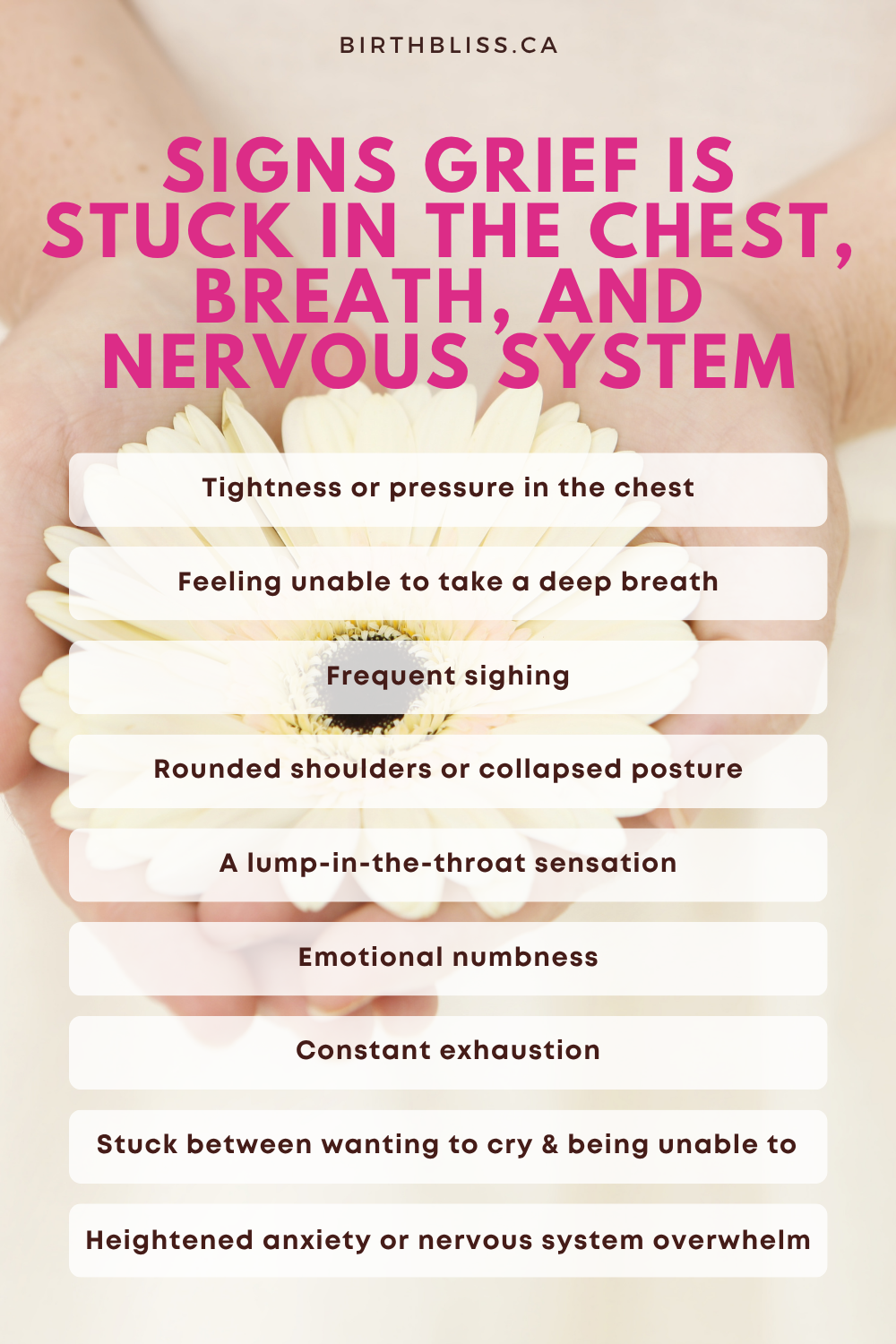
Signs Grief Is Stuck in the Chest, Breath, and Nervous System
Grief affects everyone differently, but common signs include:
- Tightness or pressure in the chest
- Feeling unable to take a deep breath
- Frequent sighing
- Rounded shoulders or collapsed posture
- A lump-in-the-throat sensation
- Emotional numbness
- Constant exhaustion
- Feeling stuck between wanting to cry and being unable to
- Heightened anxiety or nervous system overwhelm
Many women describe grief as feeling like a weight sitting on their chest. Others experience a sense of disconnection from their body altogether.
These are often signs that the nervous system is holding onto protective patterns that once felt necessary for survival.
How Somatic Movement Supports Emotional Release and Healing
Grief naturally moves in waves; we contract inward to protect ourselves, then expand outward as we heal. After a significant loss, however, the body can get stuck in that contracted, protective state.
Gentle somatic movement, such as mindful stretching, self-touch, breathwork, and swaying, restores flexibility to the nervous system. Rather than forcing emotions out, it creates a safe environment where they can naturally flow through.
Research shows that movement, breath awareness, and vagal nerve stimulation help the body shift out of survival mode and into rest and healing. For grieving mothers, this practice can feel like finally taking a full breath after holding it for far too long.
Safe Nervous System Regulation Techniques for Grief and Loss
When grief feels overwhelming, gentle practices often work better than intense emotional processing. Here are a few pregnancy-safe techniques that support nervous system regulation:
1. Self-Hug Breathing

As you inhale, gently open your arms wide and expand through your chest. As you exhale, wrap your arms around yourself in a hug. This movement mirrors the natural rhythm of contraction and expansion while encouraging feelings of safety and self-compassion.
2. Chest and Heart Support
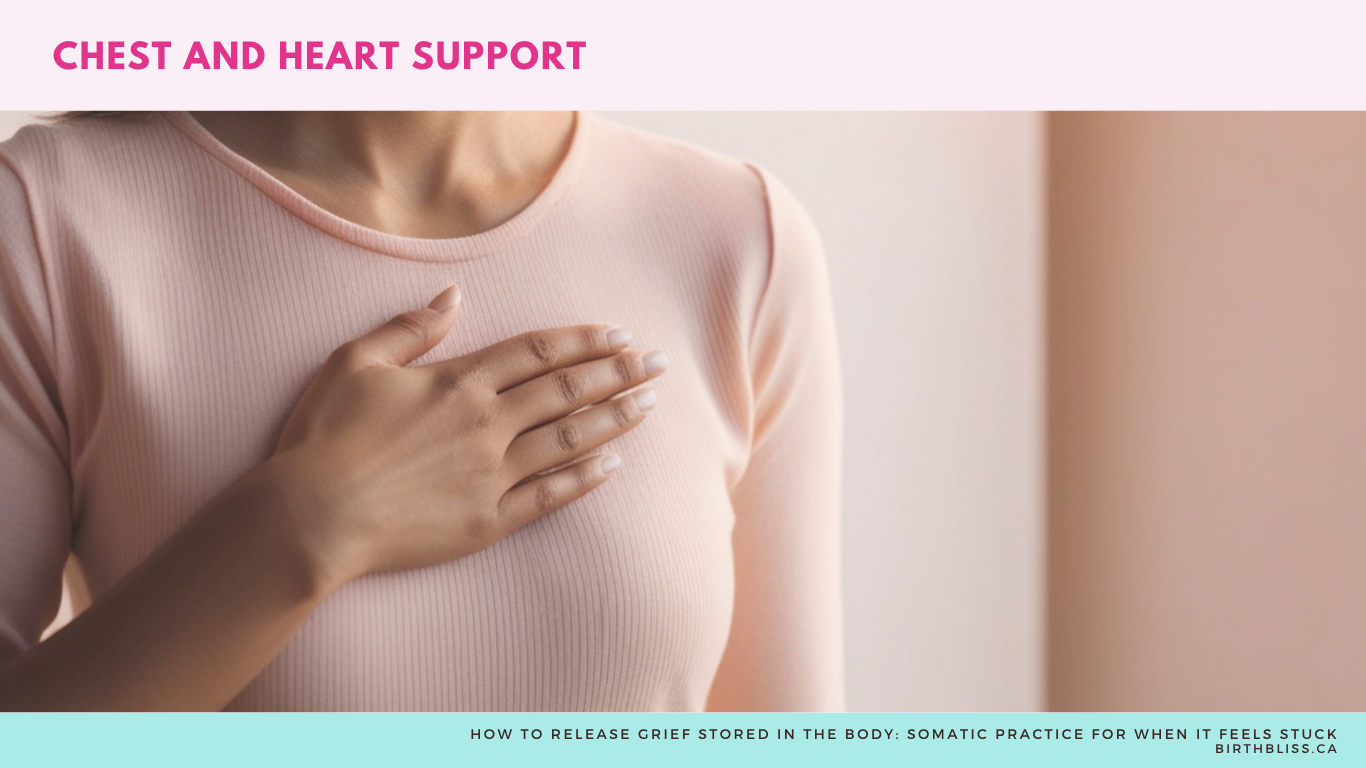
Place your hands over your upper chest and breathe slowly. The warmth and pressure of your hands can help signal safety to the nervous system while increasing body awareness.
3. Humming and Soft Sound

A gentle hum, sigh, or soft vocalization can create vibration through the chest and throat. These vibrations may help stimulate the vagus nerve, which plays an important role in relaxation and emotional regulation.
4. Gentle Swaying

Stand or sit comfortably and slowly sway from side to side. Rhythmic movement can be deeply soothing, helping the body release stress and reconnect with a sense of stability and grounding.
5. Rest and Integration

After any emotional release exercise, allow time for rest. Lie comfortably on your side with supportive pillows and notice your breath. Healing often happens during these moments of quiet integration.
Guided Somatic Practices for Miscarriage, Pregnancy Loss, and Bereavement
If you are grieving a miscarriage, pregnancy loss, stillbirth, or the loss of a loved one during pregnancy, somatic exercises for grief and emotional release can provide a gentle pathway toward healing.
A simple guided somatic practice for grief may include:
- Begin with slow breathing.
- Alternate between opening your chest and gently hugging yourself.
- Place your hands over your heart and notice any sensations.
- Allow sighs, tears, or sounds to emerge naturally if they feel safe.
- Gently sway or rock your body.
- Finish with a period of rest and stillness.
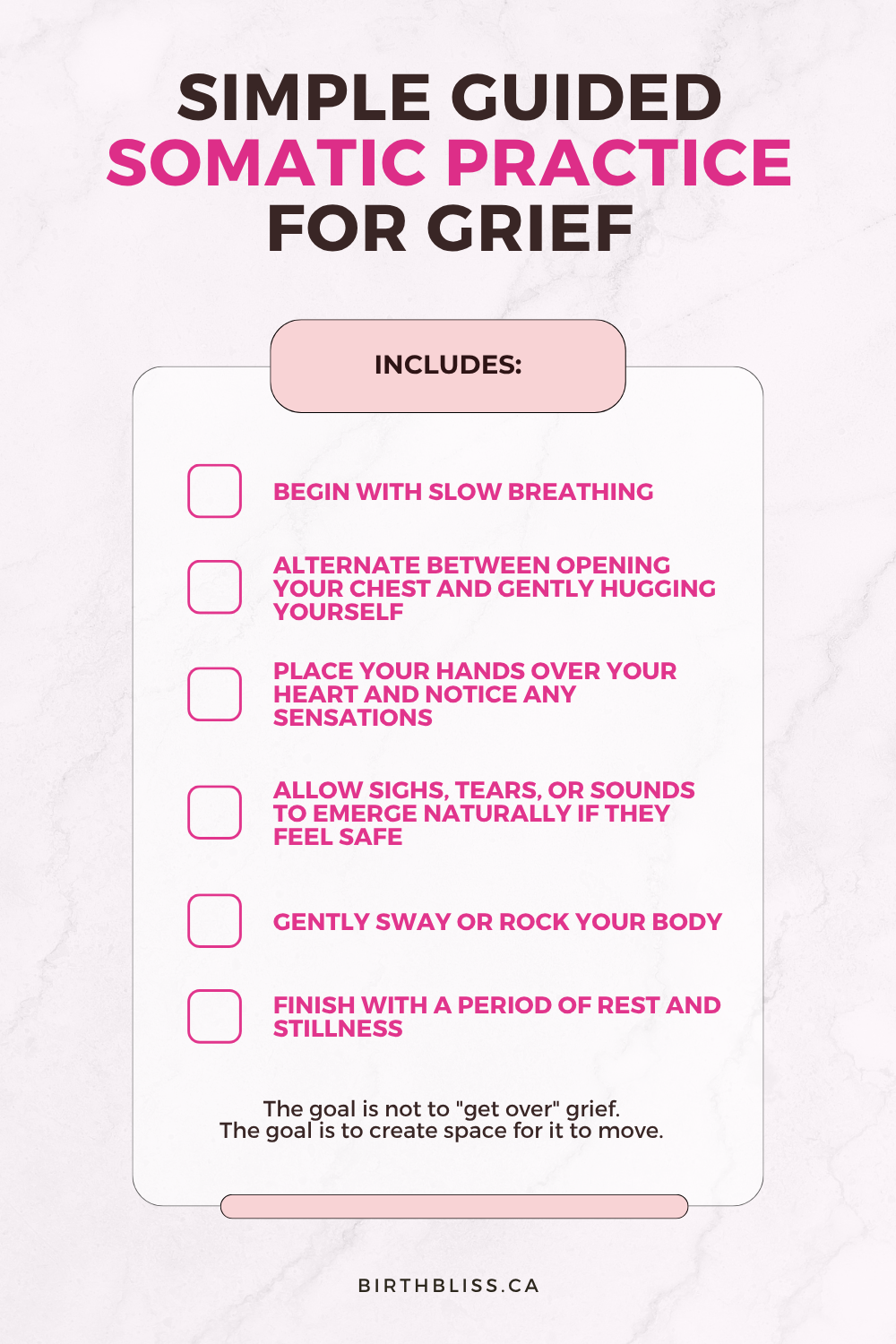
The goal is not to “get over” grief. The goal is to create space for it to move. Some days you may feel a significant shift. Other days, you may notice only a slight softening. Both are valid. Healing is rarely linear.
A Gentle Reminder for Grieving Mothers
Grief is not only an emotional experience. It is also a physical one.
If you’ve been wondering how to release grief stored in the body, know that your body already carries the wisdom to heal. Through breath, movement, self-compassion, and nervous system support, you can gradually create space for what feels stuck to move.
Whether you are navigating miscarriage, pregnancy loss, bereavement, or another form of heartbreak, remember that healing does not require forcing yourself to move on. It begins by meeting yourself exactly where you are.
One breath. One movement. One gentle moment at a time.
✨Exclusive Deals:
- FREE Pregnancy Power Smoothie Guide to Ease Nausea and Boost Energy: https://birthbliss.kit.com/smoothie-guide
- The Ultimate Pregnancy Fuel Guide (Complete with 1-3 months pregnancy diet chart): https://get.birthbliss.ca/pregnancy-fuel-guide/
- Grab Mellow Mornings for Pregnancy for a calm start to your day filled with baby love: https://get.birthbliss.ca/mellow-mornings/
- Get relief from pregnancy nausea! Discover the Bye-Bye Morning Sickness Formula: https://get.birthbliss.ca/bye-byemorningsickness/
- Find Connection Inside BLOOMFUL. 🌸 Join a community of expecting moms just like you, exploring holistic tools for a better pregnancy.: https://get.birthbliss.ca/bloomful/
- Grab the Guide to an Easier Birth: https://get.birthbliss.ca/bb/
- Join our FREE → ❤️ LOVE Your Birth Workshop. You’ll learn 3 steps to ease pain during labor (without an epidural): https://get.birthbliss.ca/training/