Whether you are planning a natural childbirth at home, in a birth center, or at a hospital, a universal goal for expectant parents is to “labor less.” Karen Bannan’s insights in Parents Magazine highlight that laboring efficiently is often a matter of preparation.
Interestingly, the strategies that lead to shorter labor are the same core pillars we teach in hypnobirthing childbirth education. Here are eight essential points to help you prepare for a more efficient and empowered birth.
1. Professional Birth Plan Guidance

Communication is the foundation of a positive experience. A birth plan shouldn’t be a list of demands, but a well-thought-out “wish list” for your medical team. Seeking birth plan guidance mid-pregnancy allows you to discuss hospital policies with your midwife or doctor.
Pro Tip: Focus on “deal-breakers”, such as immediate skin-to-skin or breastfeeding preferences, rather than obvious details.
Some suggestions are:
- HypnoBirthing: The Mongan Method by Marie F. Mongan
- The Birth Book: Everything You Need to Know by William Sears
- Ina May’s Guide to Childbirth by Ina May Gaskin
- The Maternity Sourcebook: 230 Basic Decisions by Wendy Lesko
2. Get Moving with Active Labor Positions
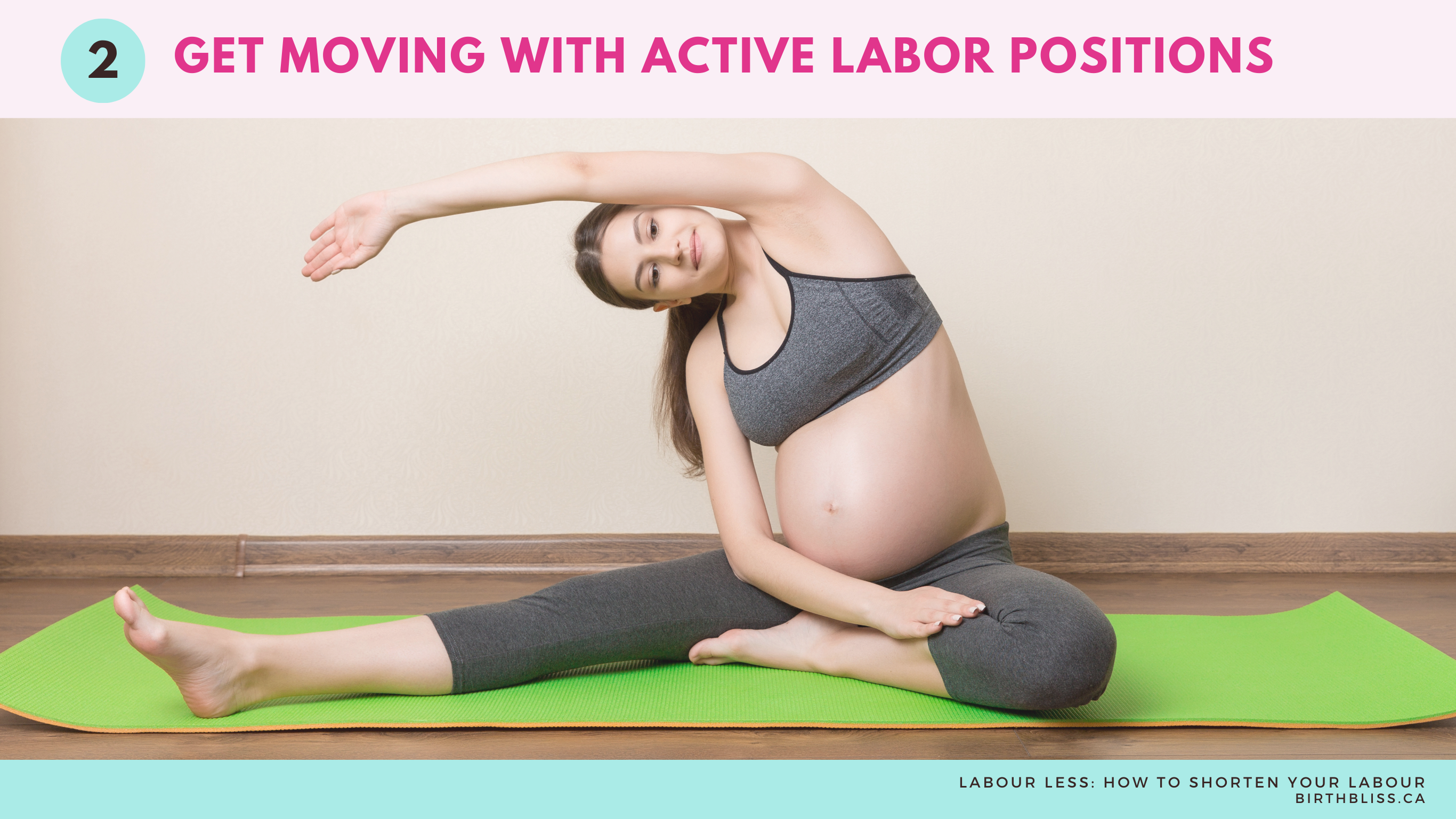
Movement is one of the most effective short-term labor strategies. Research by Mendez-Bauer and Newton in 1986 indicates that labor duration can be nearly 50% shorter for those who alternate between standing, sitting, and upright positions. Utilizing active labor positions helps the baby’s head descend and rotate into the optimal position.
Belly dancing is a fantastic option; it has long been said that Middle Eastern women used this dance specifically to assist with labor. Walking is another time-tested method that the Cochrane Review has recently validated for its ability to move labor along. Yoga is also highly effective; I used prenatal yoga for the births of my own three children and have firsthand experience with the best poses for labor. In Regina, you can find specialized prenatal yoga classes. Utilizing these active labor positions helps the baby’s head descend and rotate into the optimal position.
3. Prioritize Sleep as Labor Preparation
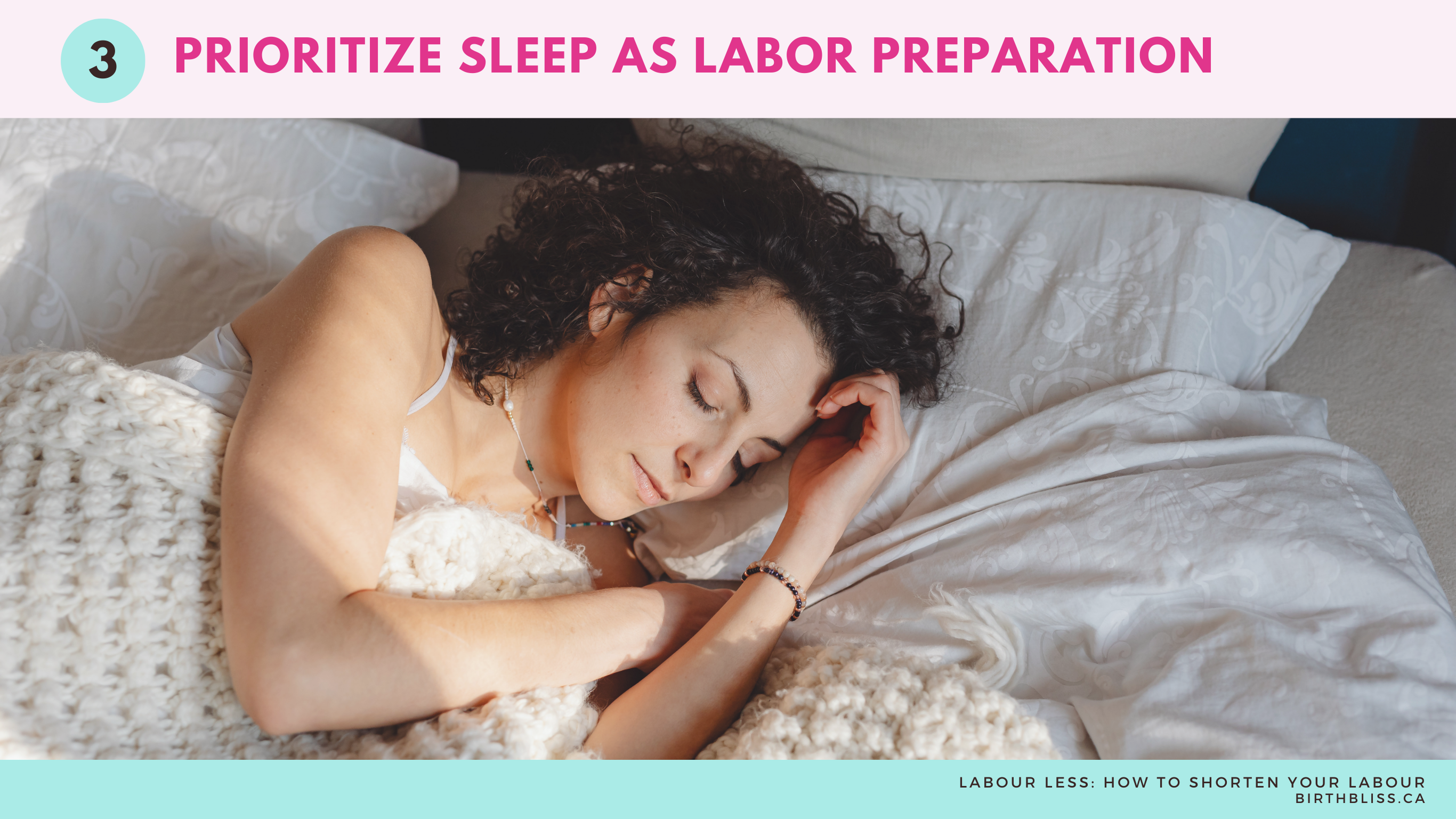
Exhaustion can stall progress. A 2004 study from the UCSF School of Nursing found that women who averaged less than six hours of sleep a night in the third trimester had significantly longer labors and were 4.5 times more likely to need a C-section. Proper labor preparation includes prioritizing rest and using body pillows for support. Meditation or a guided visualization can also help you relax.
4. Wait it Out in Comfort

Your environment directly impacts your hormones. Laboring in a space where you feel safe, usually your own home, allows labor to progress faster. Many mothers use distraction techniques, like light baking, to stay home longer, ensuring that by the time they transition to the hospital, they are further along in the process.
5. Essential Prenatal Education: Perineal Massage

A key part of prenatal education for first-time mothers is perineal massage. Starting this daily around 36 weeks helps the tissues become more pliable, significantly reducing the risk of tearing or the need for an episiotomy. Always consult your care provider before starting this practice.
6. Gravity is Your Friend

Stay on your feet! A 2004 study in the Netherlands showed that sitting or squatting resulted in shortened first and second stages of labor. Conversely, remaining in a prone (lying down) position was linked to higher incidences of instrument-assisted deliveries. Using vertical pregnancy labor techniques allows gravity to assist the downward path of the baby.
7. Utilize Relaxation for Labor
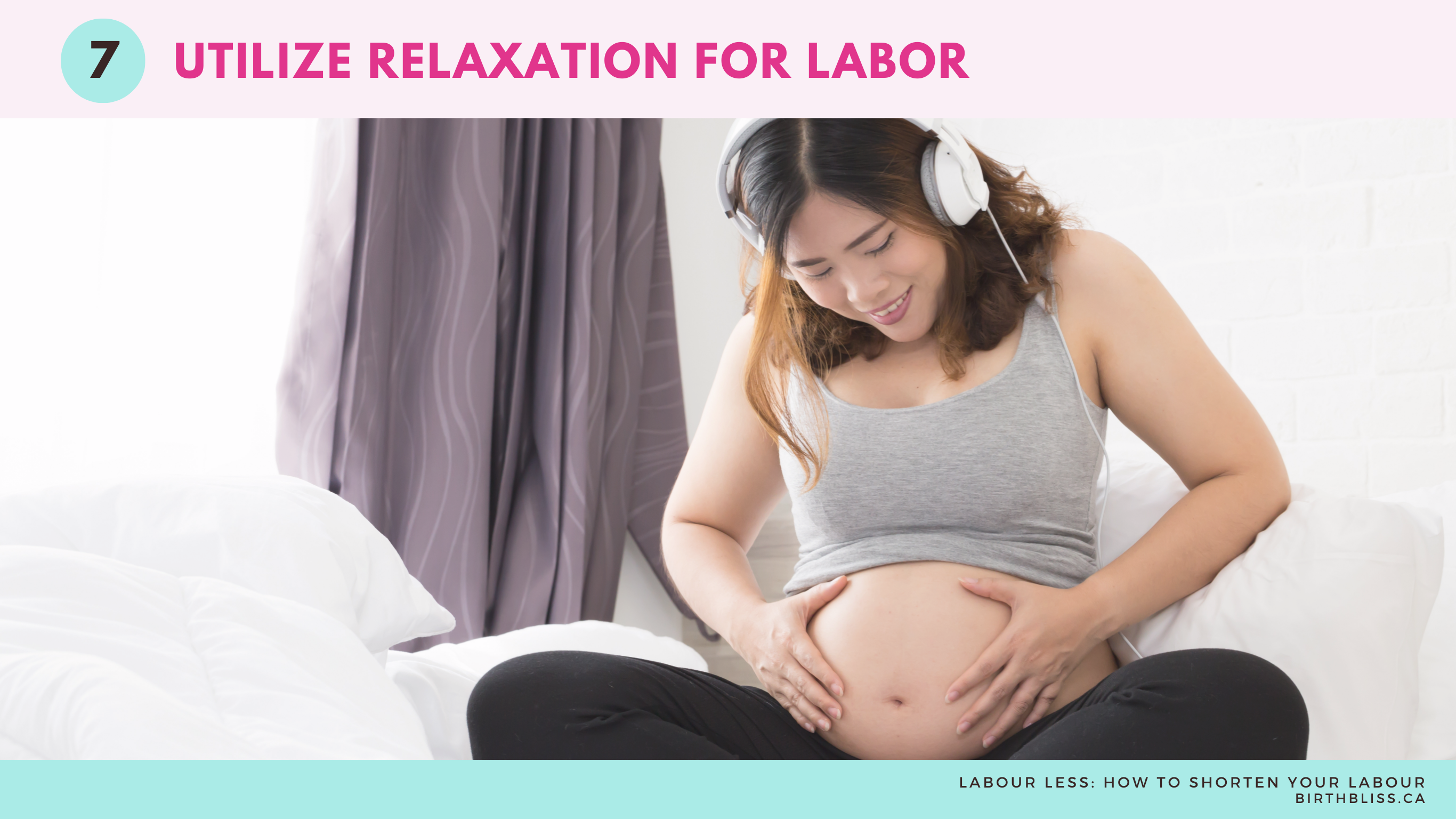
As a specialist in HypnoBirthing childbirth education, I advocate for deep relaxation tools. A 2006 Cochrane Review found that women who used self-hypnosis or relaxation for labor were more satisfied with their pain management. When the body is relaxed, the uterine muscles can work efficiently without the interference of “fear-tension” hormones.
8. Hire Doula Support for Birth
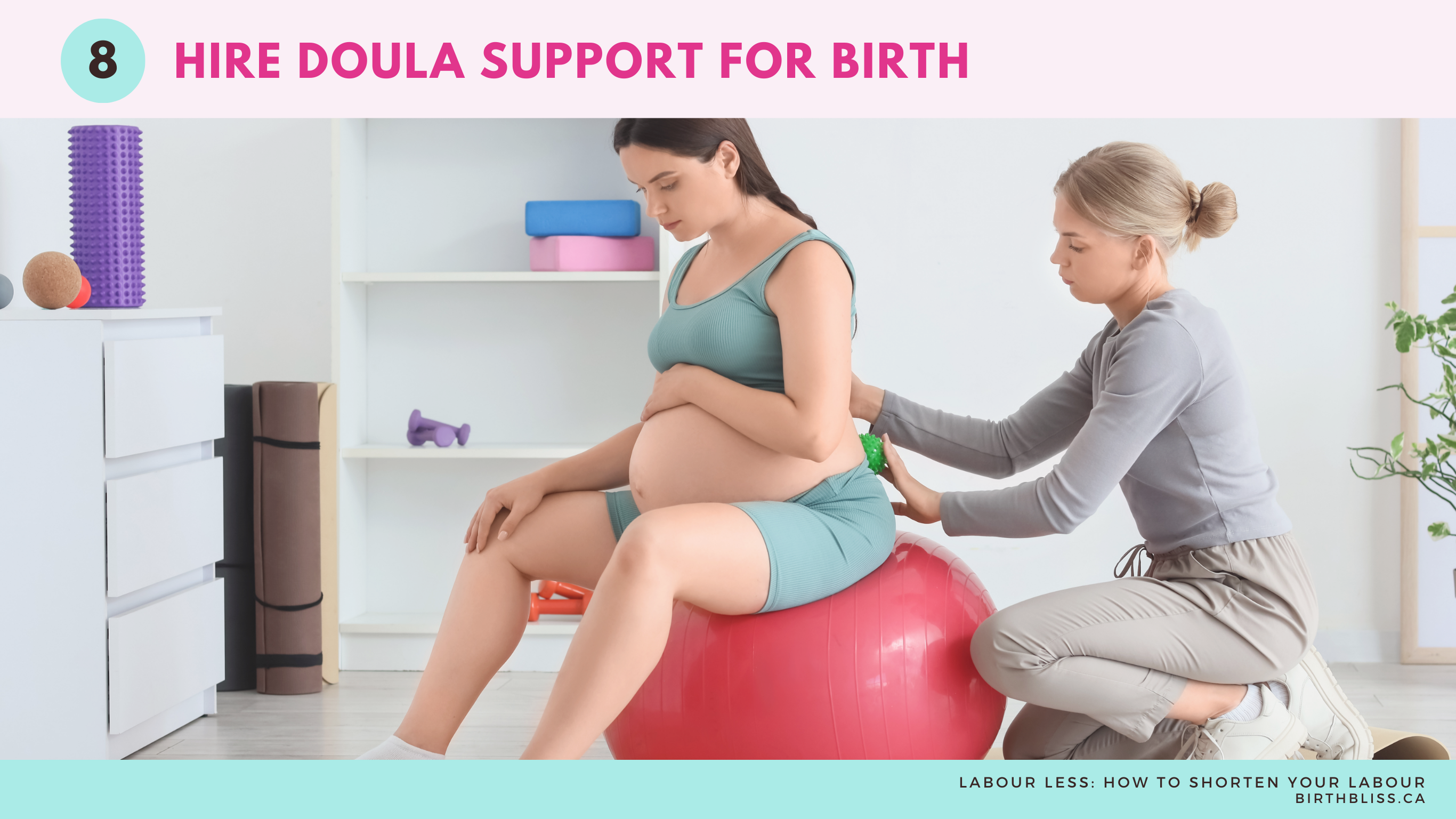
The presence of a doula is statistically proven to shorten labor. According to the research in Mothering the Mother, continuous doula support for birth can:
- Reduce labor length by 25%
- Reduce C-section rates by 50%
- Reduce the request for epidurals by 60%. Doulas provide the constant reassurance and physical comfort that keeps adrenaline low and oxytocin high.
Ultimately, the best way to ensure a shorter, more comfortable labor is to replace fear with knowledge. By integrating these physical movements, emotional supports, and relaxation tools, you aren’t just waiting for birth to “happen” to you; you are actively participating in the process.
✨Exclusive Deals:
- Grab Mellow Mornings for Pregnancy for a calm start to your day filled with baby love 💖 https://get.birthbliss.ca/mellow-mornings/
- Get relief from pregnancy nausea! 🤢 → 😌 Discover the Bye-Bye Morning Sickness Formula: https://get.birthbliss.ca/bye-byemorningsickness/
- Find Connection Inside BLOOMFUL. 🌸 Join a community of expecting moms just like you, exploring holistic tools for a better pregnancy. https://get.birthbliss.ca/bloomful/
- Grab the Guide to an Easier Birth 🌟: https://get.birthbliss.ca/bb/
- Join our FREE → ❤️ LOVE Your Birth Workshop: You’ll learn 3 steps to ease pain during labor (without an epidural): https://get.birthbliss.ca/training/