
Is vaginal breech birth safe?
If you are sitting in front of your computer right now, you likely just discovered that your little one has decided to hang out in a breech position. It is completely natural to feel a rush of uncertainty.
While the final decision is a personal one made in collaboration with your healthcare team, being armed with evidence-based maternity care is vital. Friends and family may express concern, fearing that you are taking unnecessary risks. However, the scientific landscape has shifted significantly in recent years, moving away from the “C-section only” mentality of the early 2000s toward a more nuanced understanding of breech birth options for mothers.
Breech Birth vs. C-Section Evidence: What the Research Says
For years, a planned Cesarean was the default for breech babies due to the 2000 “Term Breech Trial.” However, a critical reassessment of that data, along with newer studies like the PREMODA trial, has changed the conversation.
The latest research indicates that for specific presentations, such as a frank breech vaginal delivery (where the baby’s bottom is down but legs are straight up), the outcomes for the baby are comparable to a C-section when attended by a skilled provider. Furthermore, recovering from vaginal breech birth generally offers a much quicker and easier postpartum period compared to major abdominal surgery.
The Society of Obstetricians and Gynecologists of Canada (SOGC) Stance
The Society of Obstetricians and Gynecologists of Canada breech policy officially supports vaginal delivery as a safe option across the country. Recognizing that a generation of doctors lost the skills to perform these births, the SOGC has implemented nationwide training programs to ensure obstetricians are confident and capable.
“Our primary purpose is to offer choice to women,” states the SOGC. “Vaginal birth is the preferred method of having a baby because a C-section in itself has complications, including increased risks of bleeding, infection, and issues in future pregnancies.”
Understanding Breech Birth Guidelines in Canada
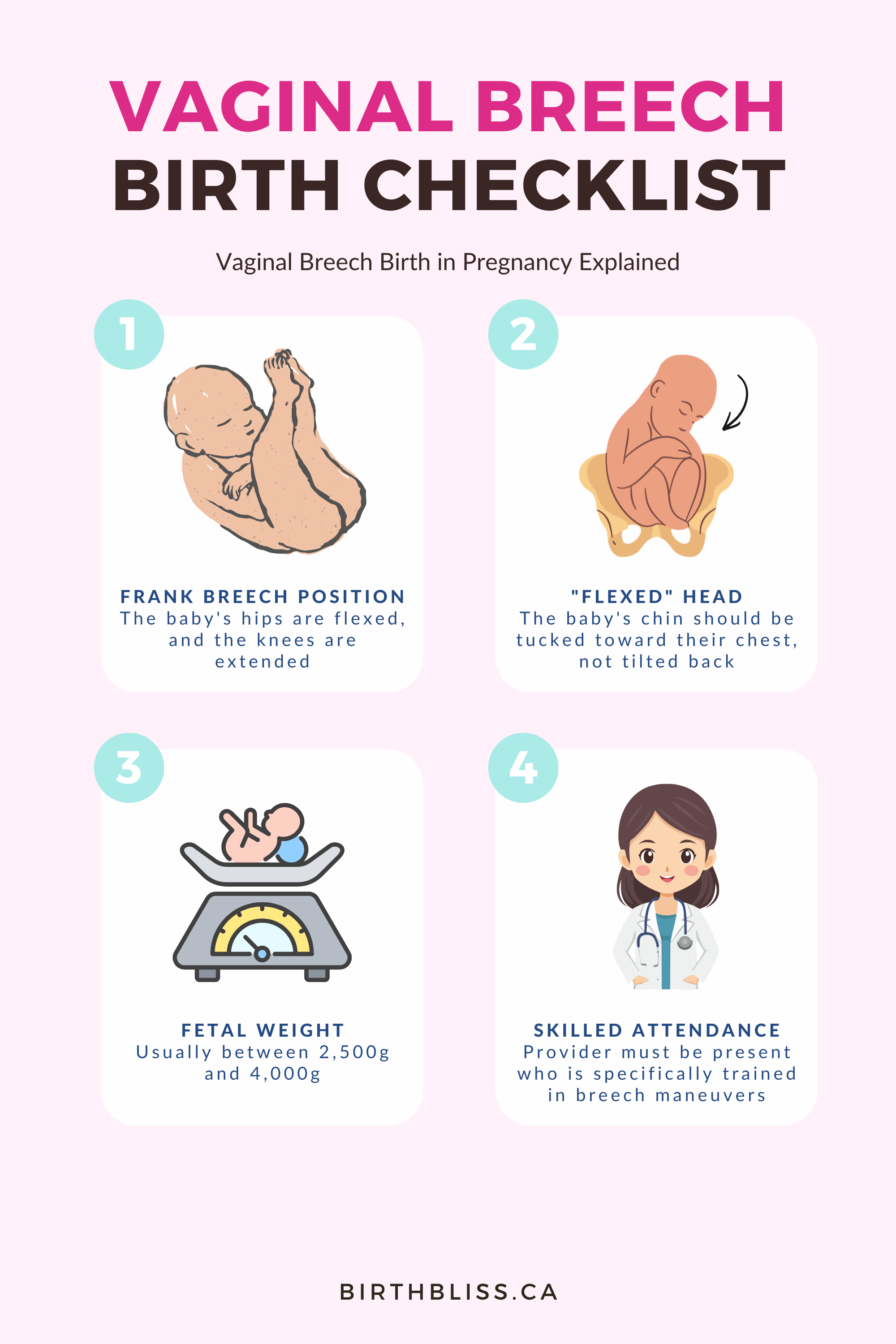
When considering a vaginal breech birth, healthcare providers follow strict breech birth guidelines in Canada to ensure maximum safety. Not every breech pregnancy is a candidate for vaginal delivery; the “green light” typically requires:
- Frank Breech Position: The baby’s hips are flexed, and knees are extended (the “pike” position).
- “Flexed” Head: The baby’s chin should be tucked toward their chest, not tilted back.
- Fetal Weight: Usually between 2,500g and 4,000g.
- Skilled Attendance: A provider must be present who is specifically trained in breech maneuvers.
Informed Decision Making in Childbirth
The move toward offering vaginal breech birth is a victory for informed decision-making in childbirth. For many women, like Robin Guy of the Coalition for Breech Birth, the lack of trained providers in the past led to “unneeded and unwanted C-sections.”
By choosing a facility and a team that support breech options, you are prioritizing a path that respects the physiological process of birth while maintaining a safety net of modern medicine. Evidence-based maternity care means looking at the whole picture: the immediate birth of this baby and your long-term health as a mother.
Choosing the Right Path for You
Breech presentations occur in approximately 3-4% of full-term pregnancies. If you are in this category, remember:
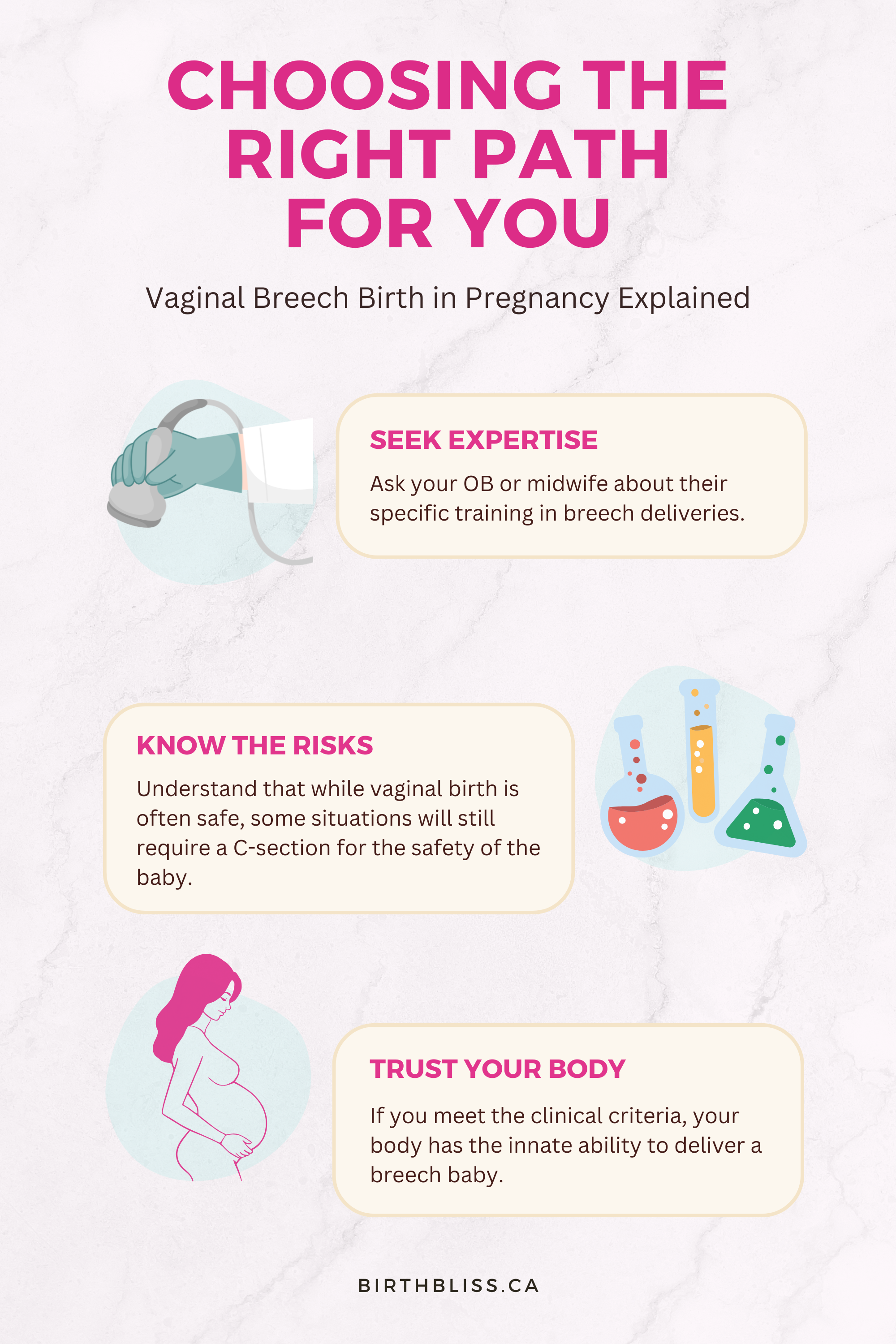
- Seek Expertise: Ask your OB or midwife about their specific training in breech deliveries.
- Know the Risks: Understand that while vaginal birth is often safe, some situations will still require a C-section for the safety of the baby.
- Trust Your Body: If you meet the clinical criteria, your body has the innate ability to deliver a baby in breech position.
Further Reading
Yoga Postures for Labour: Discover movements that bring comfort and ease to the birthing process.
The Power of the Placenta: Learn how placenta ingestion may support milk supply and postpartum recovery.
Vaginal birth is a natural process, and the medical community is finally returning to a place where that process is respected, even when the baby is “upside down.”
✨Exclusive Deals:
- FREE Pregnancy Power Smoothie Guide to Ease Nausea and Boost Energy: https://birthbliss.kit.com/smoothie-guide
- The Ultimate Pregnancy Fuel Guide (Complete with 1-3 months pregnancy diet chart): https://get.birthbliss.ca/pregnancy-fuel-guide/
- Grab Mellow Mornings for Pregnancy for a calm start to your day filled with baby love: https://get.birthbliss.ca/mellow-mornings/
- Get relief from pregnancy nausea! Discover the Bye-Bye Morning Sickness Formula: https://get.birthbliss.ca/bye-byemorningsickness/
- Find Connection Inside BLOOMFUL. 🌸 Join a community of expecting moms just like you, exploring holistic tools for a better pregnancy.: https://get.birthbliss.ca/bloomful/
- Grab the Guide to an Easier Birth: https://get.birthbliss.ca/bb/
- Join our FREE → ❤️ LOVE Your Birth Workshop. You’ll learn 3 steps to ease pain during labor (without an epidural): https://get.birthbliss.ca/training/




3 thoughts on “Vaginal Breech Birth in Pregnancy Explained”
Hi Marie, thanks for this info, am loving your blog site I have just started one called breechbabies.wordpress.com and do not yet understand the whole tagging thing nor how to get my pages looking quite as fantastic as yours!! But I have moments here and there to get down some of my passionate birth thoughts having safely experienced two of my three births in the breech position, one buttock presentation, one footling born at home. I am so encouraged that Canada are leading the way with this research and beginning the re-skilling of professionals to give women a real choice for their breech births! I look fwd to exploring your site more in the future. Best wishes, Ali
Hi Ali,
Glad you are enjoying the blog! And it sounds like you are as passionate about birth as me. My dream is for women to experience birth as a celebration of life. And every step along the way helps. 🙂
Marie