After a pregnancy loss, it is common to replay what happened and wonder if you could have done something differently.
Did I rest enough? Did I eat the wrong thing? Should I have gone to the doctor sooner? Could I have prevented this?
These questions can become a painful cycle of miscarriage guilt and self-doubt. But understanding where these thoughts come from, and learning how to respond to them with compassion, can be an important part of recovery.
Why Do I Feel Guilty After a Miscarriage?
Guilt after miscarriage often comes from our natural need to understand what happened.
When something unexpected happens, the brain looks for a reason. It asks, What caused this? What could I have done differently? If we can find an answer, it can feel as though we might be able to prevent something similar in the future.
This is one reason feeling guilty after miscarriage can be so persistent.
You may find yourself thinking:
- “If only I had rested more.”
- “What if I had eaten differently?”
- “Maybe I shouldn’t have exercised.”
- “I should have known something was wrong.”
- “What if I had done something sooner?”
These thoughts can feel convincing, but they don’t mean they reflect what actually happened.
Understanding the Causes of Miscarriage
Understanding the causes of miscarriage may help put some of these questions into perspective.
Early pregnancy involves complex genetic, cellular, and hormonal processes that are largely outside our control. Chromosomal abnormalities are a common cause of early miscarriage, although sometimes no specific cause can be identified.
So, why miscarriages happen is not always something that can be traced back to a person’s actions.
Everyday activities such as working, exercising, having sex, or experiencing normal amounts of stress are generally not considered causes of miscarriage. Your healthcare provider can help you understand your individual circumstances and answer questions about your medical history.
Miscarriage Is Not Your Fault
It can be difficult to separate facts from emotions when you’re grieving.
You may logically understand that you couldn’t control everything that happened, while another part of you continues searching for something to blame.
This is where miscarriage blame can become especially painful. Instead of focusing only on what happened, the mind starts looking for what you supposedly did wrong.
Try changing the question from: “What did I do to cause this?”
to: “What do I actually know about what happened?”
That small shift can help create some distance between what you feel and what you know.
Moving Through Self-Blame After Pregnancy Loss
Self-blame after pregnancy loss can make grief harder to process. You may find yourself repeatedly going over the days or weeks before the miscarriage, looking for a moment you could have changed.
When that happens, try offering yourself a more balanced perspective:
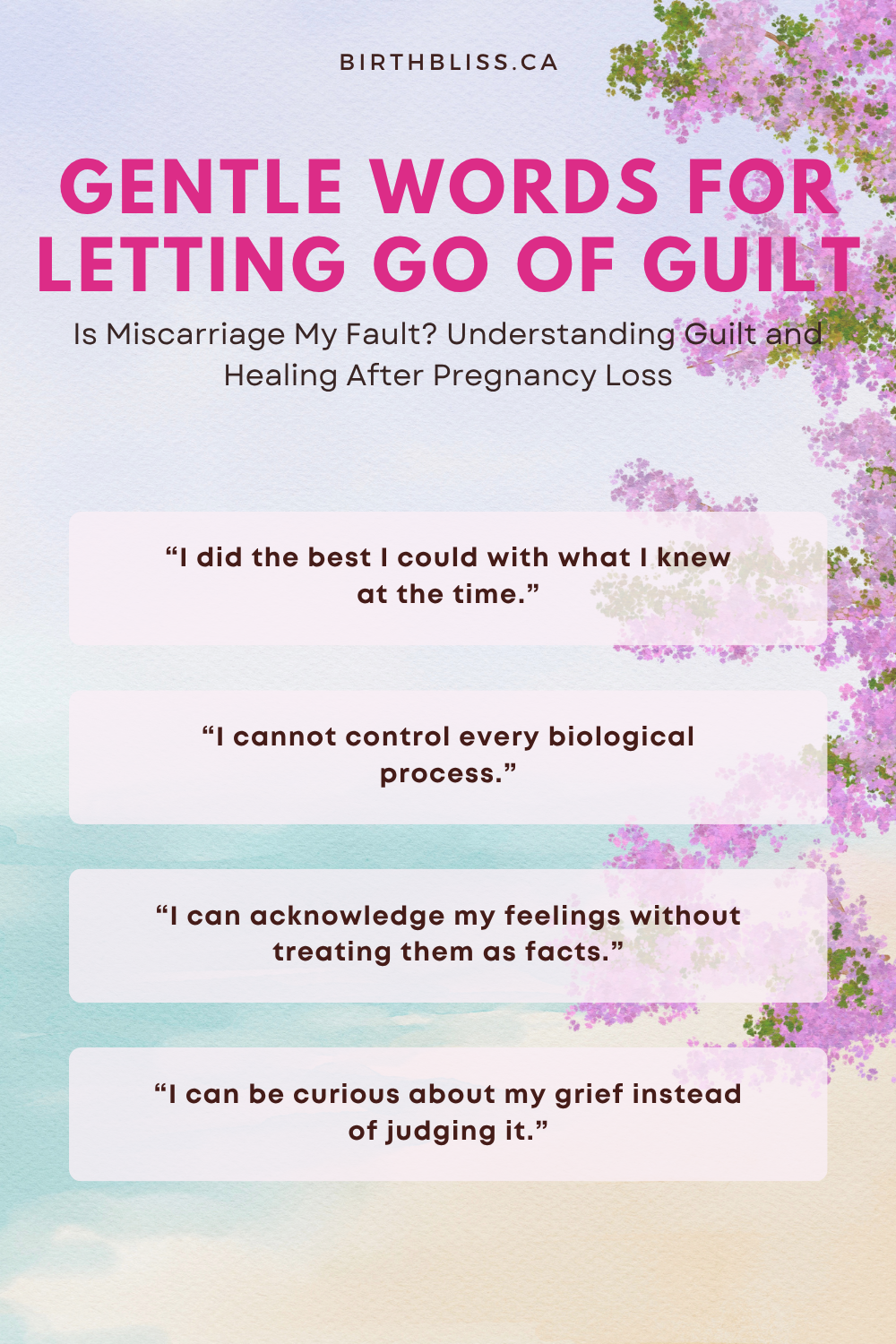
- I did the best I could with what I knew at the time.
- I cannot control every biological process.
- I can acknowledge my feelings without treating them as facts.
- I can be curious about my grief instead of judging it.
You don’t have to replace guilt with positive thinking. Sometimes the first step toward healing from miscarriage guilt is simply making the story less harsh.
A Gentle Practice for Letting Go of Blame
If you’re wondering how to stop blaming yourself after miscarriage, try this simple grounding practice.
Sit or lie somewhere comfortable. Place one hand over your heart and the other on your lower belly.
Take a slow breath in through your nose, followed by a longer, gentle exhale.
As you breathe out, relax your shoulders.
Then silently say:
“I’m allowed to soften into this.”
Take two more slow breaths.
You don’t have to make the guilt disappear. Just notice whether you can create a little more space around it.
When you’re ready, reflect on this prompt:
“I believe I’m ready to soften, even just a little, because…”
You can write your answer down or simply sit with it.
How to Cope After Miscarriage
There is no single answer for how to cope after miscarriage. Some people need conversation and connection, while others need quiet and time alone.
You might find it helpful to:
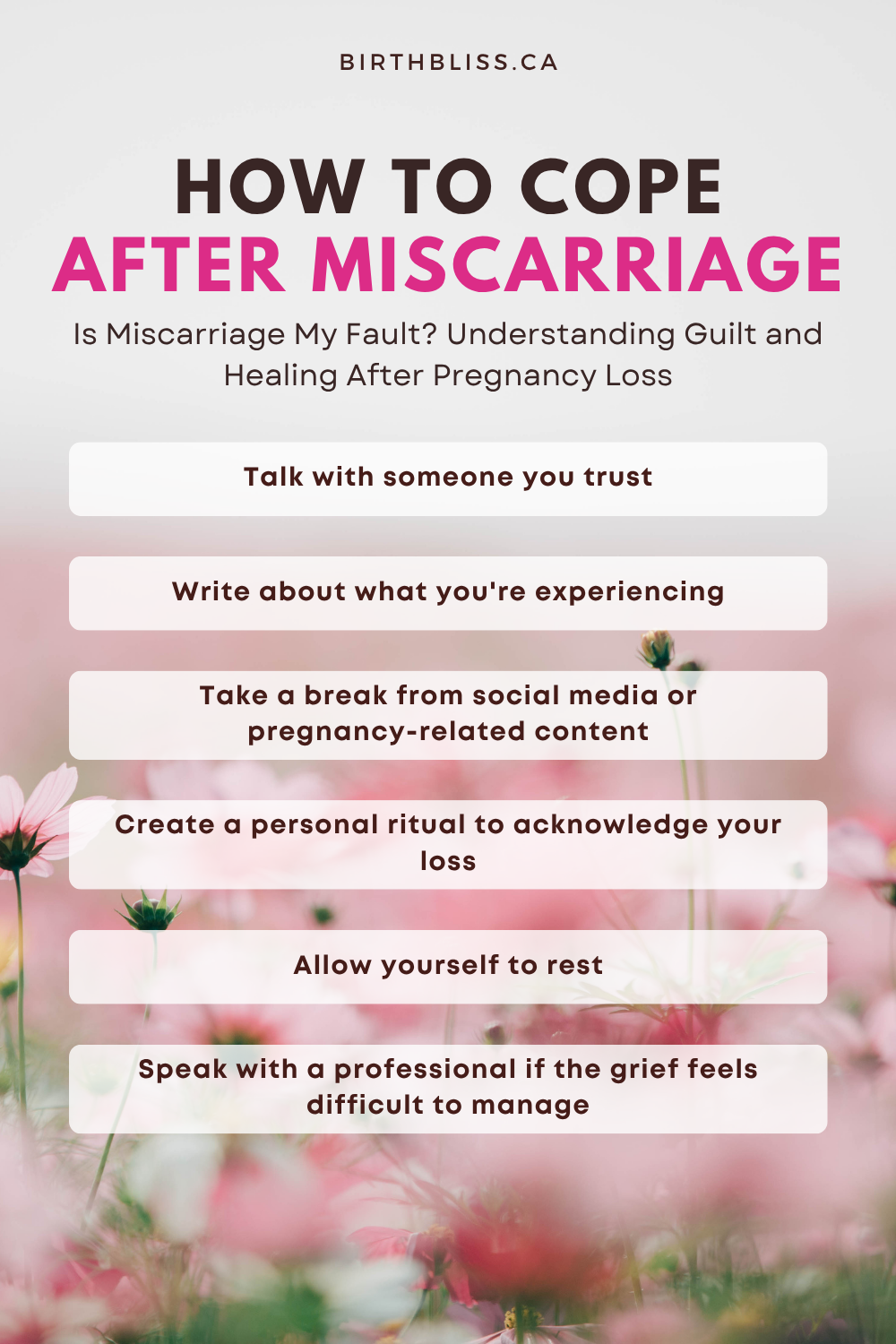
- Talk with someone you trust.
- Write about what you’re experiencing.
- Take a break from social media or pregnancy-related content.
- Create a personal ritual to acknowledge your loss.
- Allow yourself to rest.
- Speak with a counselor or healthcare professional if the grief feels difficult to manage.
Try to focus on what helps you feel supported rather than what you think you should be doing.
Emotional Healing After Miscarriage
Emotional healing after miscarriage doesn’t happen on a fixed schedule.
Some days may feel manageable, while other days may bring unexpected sadness or difficult memories. Guilt may also come and go. That’s part of why healing after pregnancy loss is a process rather than a single moment. If guilt, sadness, anxiety, or other emotions become overwhelming or interfere with your everyday life, reaching out to a mental health professional or healthcare provider can provide additional support.
If you’re looking for support while navigating pregnancy loss, Bloom After Loss is a donation-based support program from BirthBliss. The program offers a gentle space to work through the emotional impact of loss and explore practices that support your body, nervous system, and emotional well-being.
You can learn more here: Bloom After Loss
You Don’t Have to Have All the Answers
After miscarriage, it can be tempting to keep searching for the one thing that caused it.
But sometimes there isn’t a simple answer.
Instead of repeatedly asking “What did I do wrong?”, you can begin asking “What do I need right now?”
That might be rest, information, connection, professional support, or simply some time to process what happened.
Grief takes time. Give yourself room to experience it without turning every difficult feeling into evidence that you did something wrong.
Exclusive Deals:
- FREE Pregnancy Power Smoothie Guide to Ease Nausea and Boost Energy: https://birthbliss.kit.com/smoothie-guide
- The Ultimate Pregnancy Fuel Guide (Complete with 1-3 months pregnancy diet chart): https://get.birthbliss.ca/pregnancy-fuel-guide/
- Grab Mellow Mornings for Pregnancy for a calm start to your day filled with baby love: https://get.birthbliss.ca/mellow-mornings/
- Get relief from pregnancy nausea! Discover the Bye-Bye Morning Sickness Formula: https://get.birthbliss.ca/bye-byemorningsickness/
- Find Connection Inside BLOOMFUL. Join a community of expecting moms just like you, exploring holistic tools for a better pregnancy: https://get.birthbliss.ca/bloomful/
- Grab the Guide to an Easier Birth: https://get.birthbliss.ca/bb/
- Join our FREE → LOVE Your Birth Workshop. You’ll learn 3 steps to ease pain during labor (without an epidural): https://get.birthbliss.ca/training/