

If you’ve ever experienced morning sickness, you know it can make even the simplest parts of your day feel difficult. You might wake up nauseous, struggle to eat breakfast, or avoid certain smells that never bothered you before. And when you think it’s getting better, the nausea comes back.
For some women, morning sickness is a mild inconvenience. For others, it can make eating, drinking, working, and going about their daily routines almost impossible.
But what causes morning sickness, and why do some pregnant women experience it more severely than others?
For years, researchers believed that pregnancy hormones were mainly responsible. While hormonal changes during pregnancy do play an important role, newer research has uncovered another key player: a hormone called GDF15.
Understanding the connection between GDF15 and morning sickness can help explain why pregnancy nausea happens, why some women feel much sicker than others, and what you can do to find relief.
What Causes Morning Sickness During Pregnancy?
Morning sickness is one of the most common experiences during early pregnancy. Despite its name, it doesn’t only happen in the morning. Nausea can occur at any time of the day, including during the afternoon or evening.
The exact causes of morning sickness involve several biological factors, including changes in pregnancy hormones, signals from the placenta, and how your body responds to these changes.
Pregnancy nausea usually begins during the first trimester, often before the ninth week. For many women, symptoms improve around weeks 14 to 16, although some experience nausea for much longer.
So, why does morning sickness happen in the first place?
The answer is more complicated than simply having an increase in pregnancy hormones. Researchers now understand that certain hormones send signals to the brain that can trigger nausea and vomiting.
One of the most important discoveries involves GDF15, a hormone produced in large amounts during pregnancy.
The Role of GDF15: A Major Discovery in Morning Sickness Research
One of the biggest developments in understanding morning sickness came from research published in the journal Nature in 2024.
Researchers identified a strong connection between a hormone called Growth Differentiation Factor 15 (GDF15) and nausea and vomiting during pregnancy, including severe morning sickness.
But what exactly is GDF15?
GDF15 is a hormone naturally produced by the body, particularly in response to certain types of stress. During pregnancy, the placenta and developing baby produce significant amounts of this hormone, causing levels in the mother’s bloodstream to rise.
GDF15 communicates with a specific area of the brainstem involved in controlling nausea, vomiting, and appetite.
Think of it as a messenger that tells your brain how your body is responding to certain biological signals. When GDF15 activates this pathway, it can trigger feelings of nausea and the urge to vomit.
This helps explain why pregnancy nausea and vomiting are so common.
Interestingly, GDF15 is not simply a harmful hormone. It has important biological functions, and its role in pregnancy is still being studied. Its connection to nausea is one part of a much bigger picture.
Why Do Some Pregnant Women Feel Sicker Than Others?
Here’s where the research gets especially interesting.
Almost every pregnancy involves an increase in GDF15. However, not every pregnant woman experiences the same level of nausea.
Some women feel slightly queasy in the morning, while others struggle with constant nausea and frequent vomiting.
So, if everyone experiences an increase in this hormone, why are some women more affected?
Researchers found that the answer may have something to do with pregnancy hormone sensitivity.
It’s not just about how much GDF15 your body produces during pregnancy. It’s also about how sensitive your body is to the hormone.
A study published in Nature found that women with lower GDF15 levels before pregnancy may be more sensitive to the sudden increase in the hormone during pregnancy.
Here’s an easy way to understand it.
Imagine two people drinking coffee. One person can enjoy three cups without feeling any different, while another becomes jittery after just one cup.
They’re consuming the same substance, but their bodies respond differently.
The same idea may apply to GDF15.
Women who have had lower levels of this hormone before pregnancy may be less accustomed to it. When pregnancy causes GDF15 levels to rise significantly, their bodies may respond more strongly.
This difference in sensitivity could help explain why some pregnant women feel much sicker than others.
It also means that experiencing severe nausea isn’t a sign that you’re weak, overly sensitive, or doing something wrong. Your body’s biological response is simply different.
How Do Pregnancy Hormones Contribute to Nausea?
Although GDF15 is an important discovery, it isn’t the only hormone involved in pregnancy nausea.
Several pregnancy hormones and nausea-related pathways may influence how you feel during the first few months of pregnancy.
Here are some of the hormones researchers commonly discuss:
1. Human Chorionic Gonadotropin (hCG)
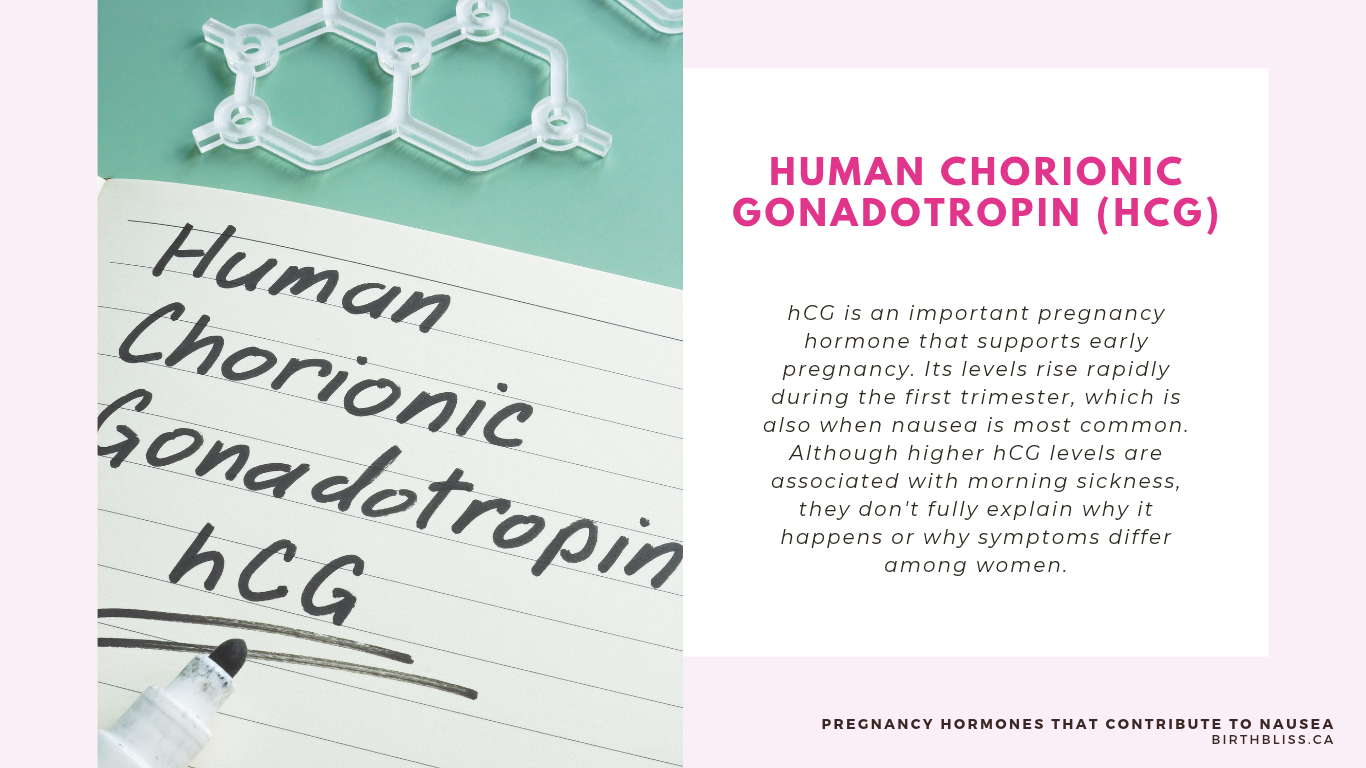
Human chorionic gonadotropin, or hCG, is one of the first hormones produced during pregnancy. It helps support the early stages of pregnancy and is often associated with morning sickness.
hCG levels rise rapidly during the first trimester, which is also when many women experience their most noticeable nausea.
Although researchers have found associations between hCG levels and nausea, it doesn’t fully explain why morning sickness happens or why symptoms vary so much between women.
2. Estrogen
Estrogen levels increase throughout pregnancy and help support the development of the uterus and other important changes in the body.
Changes in estrogen may contribute to nausea in some women. It may also influence how sensitive you feel to certain smells, which can make previously familiar foods or scents suddenly unpleasant.
3. Progesterone
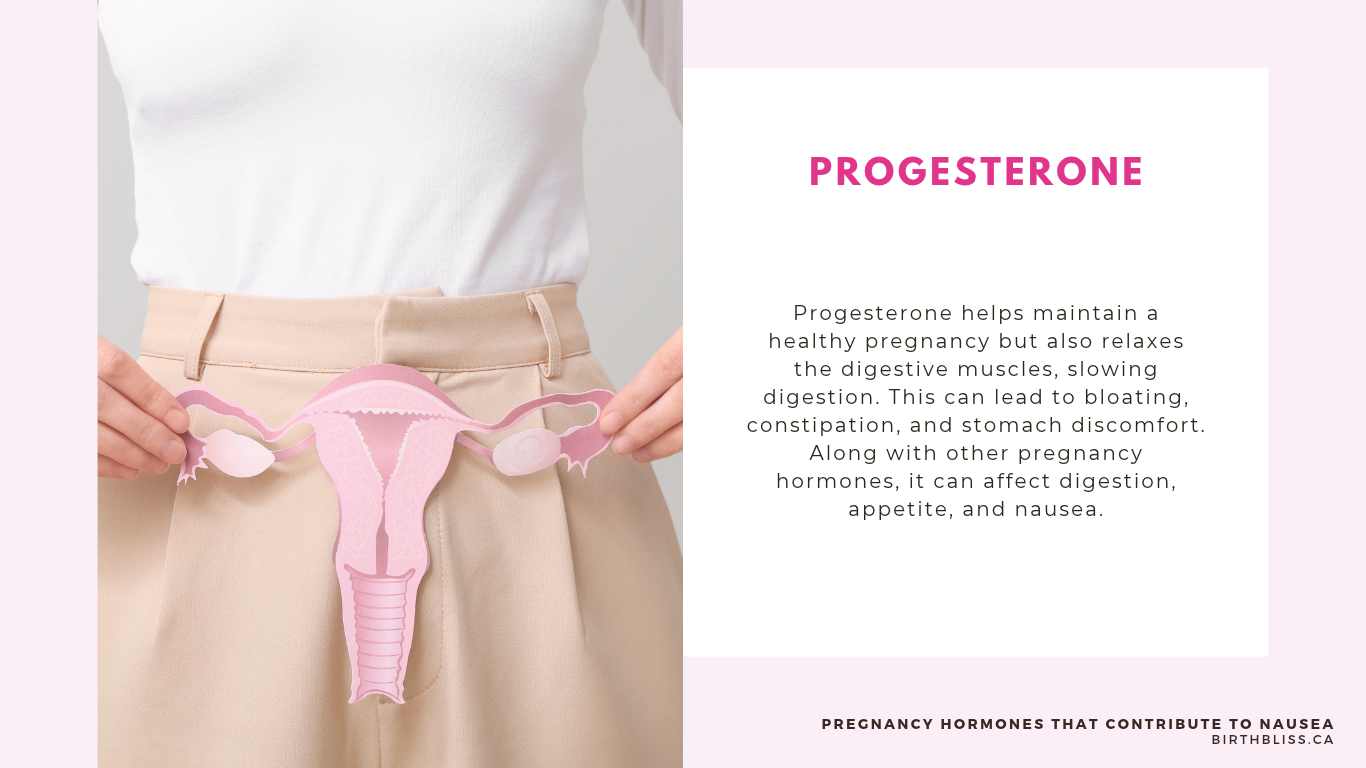
Progesterone is another important pregnancy hormone. It helps maintain the uterine lining and supports a healthy pregnancy.
It can also relax the muscles of the digestive tract, slowing down digestion. For some women, this may contribute to bloating, constipation, and stomach discomfort.
Together, these hormonal changes during pregnancy can influence digestion, appetite, and how your body responds to different triggers.
However, it’s important to remember that pregnancy nausea is not caused by one hormone alone. The interaction between hormones, the nervous system, and individual biological differences makes each pregnancy experience unique.
What Is the Difference Between Morning Sickness and Hyperemesis Gravidarum?
While mild pregnancy nausea is common, some women experience symptoms that go far beyond occasional queasiness.
This severe form of pregnancy nausea and vomiting is called hyperemesis gravidarum (HG).
Unlike typical morning sickness, hyperemesis gravidarum can make it extremely difficult to eat or drink enough to stay hydrated and nourished.
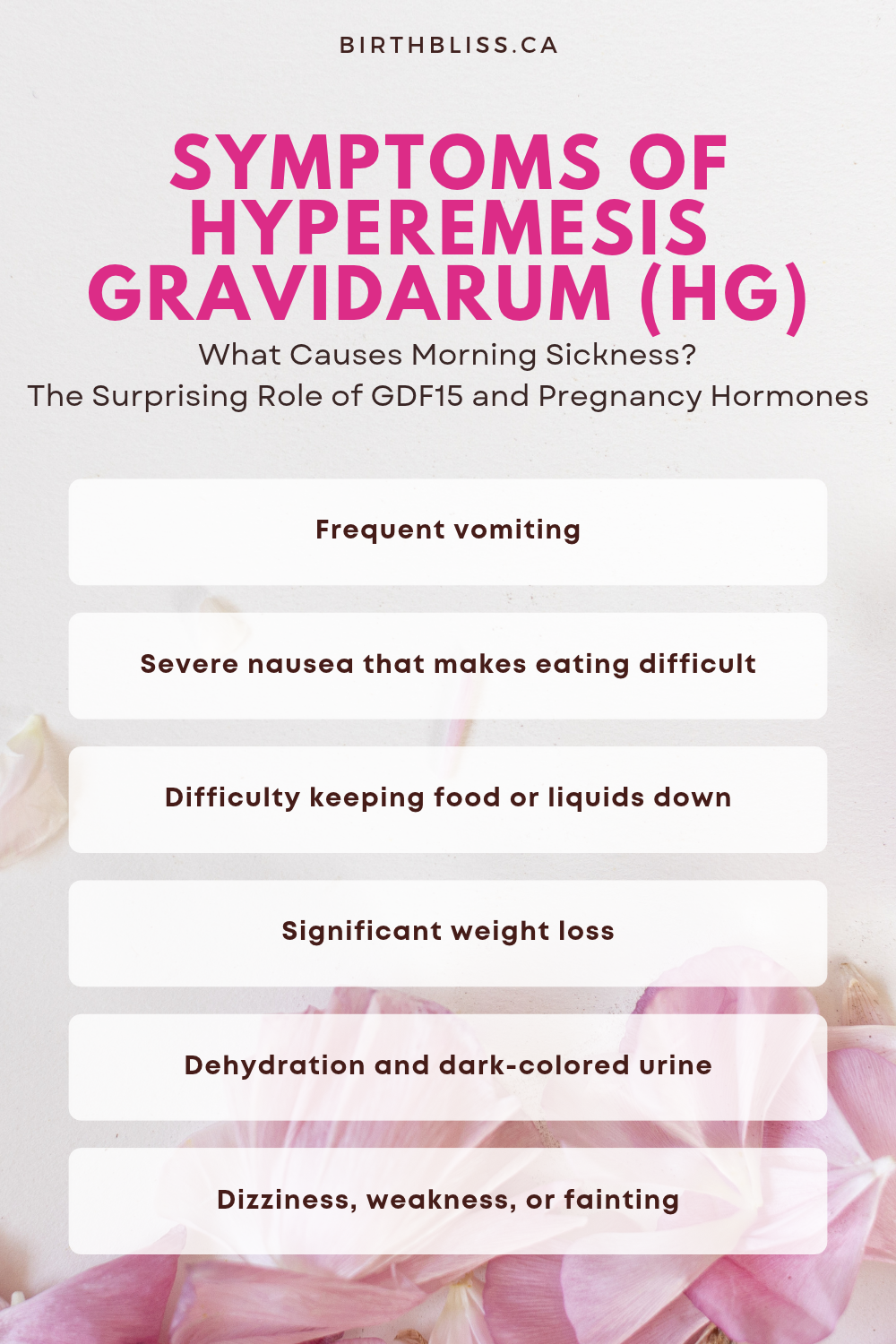
Symptoms may include:
- Frequent vomiting
- Severe nausea that makes eating difficult
- Difficulty keeping food or liquids down
- Significant weight loss
- Dehydration and dark-colored urine
- Dizziness, weakness, or fainting
Severe morning sickness should never be dismissed as something you simply have to endure.
If you cannot keep fluids down, are urinating very little, feel faint, or are losing weight, contact your healthcare provider promptly. You may need medical treatment, including fluids and medication.
The good news is that treatment options are available. Your doctor can help determine the right approach based on your symptoms and pregnancy needs.
Can You Improve Your Body’s Response to Pregnancy Hormones?
Now that we understand more about GDF15 and morning sickness, another interesting question comes up:
If your sensitivity to pregnancy hormones influences how sick you feel, can you change how your body responds?
Researchers have identified the possibility that the body’s response to GDF15 can change depending on its previous exposure to the hormone. This process is known as desensitization.
In the 2024 Nature study, researchers found evidence of this process in animal experiments, suggesting that prior exposure to GDF15 may influence the body’s response to later exposure.
This is an important finding because it may help scientists develop new approaches to preventing or treating severe nausea and vomiting during pregnancy.
However, more human research is needed. Scientists have not yet established a proven way to retrain the body to tolerate GDF15 or prevent morning sickness through natural methods.
For now, supporting your overall well-being can still be a valuable part of managing pregnancy symptoms.
A Holistic Approach to Pregnancy Wellness
Pregnancy affects more than just your reproductive system. It brings changes to your digestion, sleep, energy levels, emotional well-being, and nervous system.
This is why holistic pregnancy wellness can be a helpful part of your overall care.
A holistic approach focuses on supporting your body through different aspects of daily life, rather than looking at individual symptoms in isolation.
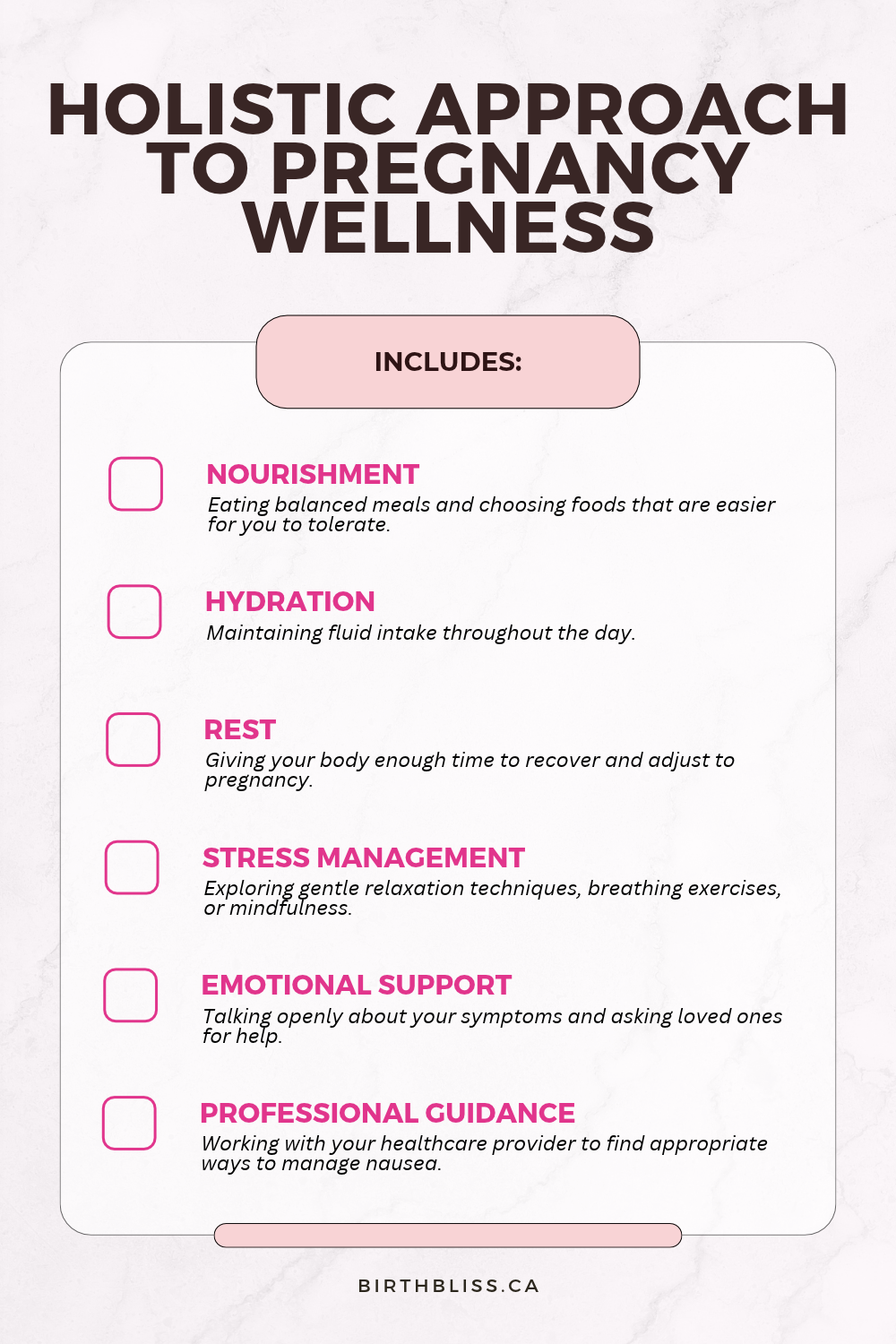
This may include:
- Nourishment: Eating balanced meals and choosing foods that are easier for you to tolerate.
- Hydration: Maintaining fluid intake throughout the day.
- Rest: Giving your body enough time to recover and adjust to pregnancy.
- Stress management: Exploring gentle relaxation techniques, breathing exercises, or mindfulness.
- Emotional support: Talking openly about your symptoms and asking loved ones for help.
- Professional guidance: Working with your healthcare provider to find appropriate ways to manage nausea.
These practices can support your general well-being, but they should not be considered a cure for GDF15-related nausea or a replacement for medical treatment.
Most importantly, remember that your pregnancy experience doesn’t have to look like anyone else’s.
Some women experience very little nausea, while others need additional medical support to get through the day. Both experiences are valid.
Exclusive Deals:
- FREE Pregnancy Power Smoothie Guide to Ease Nausea and Boost Energy: https://birthbliss.kit.com/smoothie-guide
- The Ultimate Pregnancy Fuel Guide (Complete with 1-3 months pregnancy diet chart): https://get.birthbliss.ca/pregnancy-fuel-guide/
- Grab Mellow Mornings for Pregnancy for a calm start to your day filled with baby love: https://get.birthbliss.ca/mellow-mornings/
- Get relief from pregnancy nausea! Discover the Bye-Bye Morning Sickness Formula: https://get.birthbliss.ca/bye-byemorningsickness/
- Find Connection Inside BLOOMFUL. Join a community of expecting moms just like you, exploring holistic tools for a better pregnancy: https://get.birthbliss.ca/bloomful/
- Grab the Guide to an Easier Birth: https://get.birthbliss.ca/bb/
- Join our FREE → LOVE Your Birth Workshop. You’ll learn 3 steps to ease pain during labor (without an epidural): https://get.birthbliss.ca/training/